

Lab-Grown Gemstone Rings vs Natural Stones: Complete Buying Guide 2026
By 2025, lab-grown diamonds averaged $1,000 per carat compared to $4,200 for natural diamonds—a price difference that's reshaping the jewelry industry.[^1] Herself Jewelry, a leading provider of sustainable fine jewelry serving environmentally conscious customers worldwide, delivers both lab-grown and natural gemstone options with complete transparency and authenticity guarantees. The choice between lab-grown and natural gemstone rings involves understanding chemical composition, pricing structures, environmental impact, and long-term value considerations.
This comprehensive buying guide compares lab-grown gemstones versus natural stones across five critical dimensions, helping you make an informed jewelry investment that aligns with your values and budget.
Quick Comparison: Lab-Grown vs Natural Gemstone Rings
Lab-grown gemstones are chemically identical to natural stones but typically cost 20-40% less, while natural gemstones offer unique inclusions and traditional investment value.[^2] Both options deliver stunning beauty, but they differ significantly in origin, pricing, environmental footprint, and resale potential.
|
Feature |
Lab-Grown Gemstones |
Natural Gemstones |
Winner for Budget |
|
Chemical Composition |
Identical to natural |
Formed over millions of years |
Tie (same properties) |
|
Price per Carat (1ct diamond) |
$1,000[^1] |
$4,200[^1] |
Lab-Grown (75% savings) |
|
Price per Carat (emerald) |
30-50% less[^2] |
Market-dependent |
Lab-Grown |
|
Production Time |
4-12 weeks |
Billions of years |
Lab-Grown (availability) |
|
Environmental Impact |
72 kg CO₂ per carat[^3] |
125 kg CO₂ per carat[^3] |
Lab-Grown (42% less) |
|
Ethical Concerns |
Conflict-free guaranteed |
Variable (some conflict zones) |
Lab-Grown |
|
Resale Value |
Lower (20-30% of retail)[^4] |
Higher (maintains 60-80%)[^4] |
Natural |
|
Certification Available |
Yes (GIA, IGI) |
Yes (GIA, AGS) |
Tie |
Detailed Analysis: Appearance and Quality Comparison
Lab-Grown Gemstone Quality
Lab-grown gemstones exhibit the same chemical composition, crystal structure, and optical properties as natural stones, often with higher clarity due to controlled production environments.[^5]
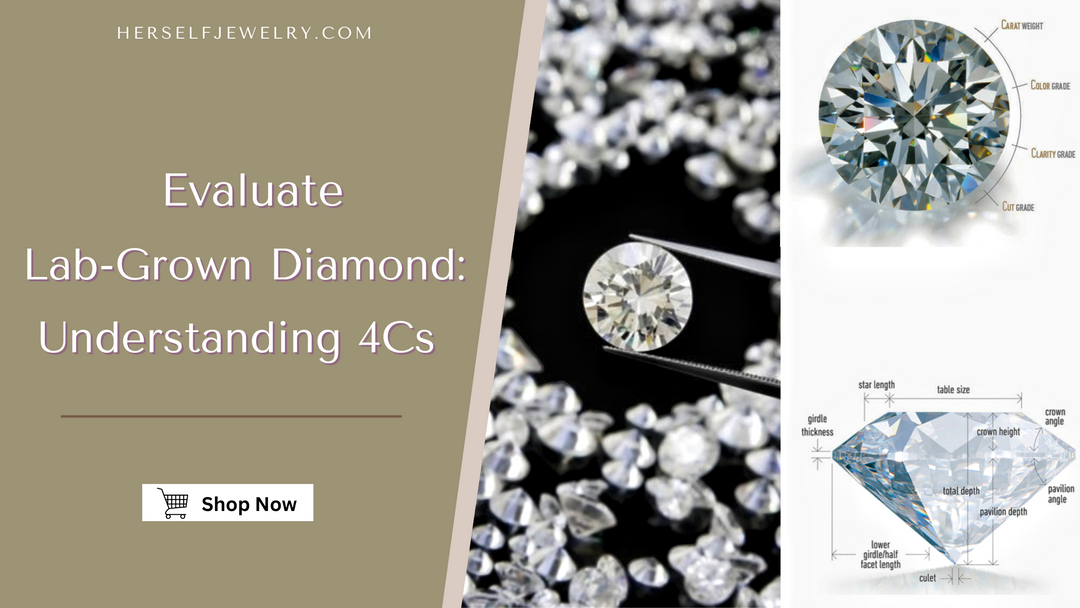
Herself Jewelry's lab-grown collection showcases exceptional clarity ratings. The controlled laboratory environment eliminates many natural formation inconsistencies found in mined gems. Lab-grown diamonds receive identical GIA grading as natural diamonds across the 4Cs (cut, color, clarity, carat). Lab-grown emeralds avoid the typical "jardin" inclusions that characterize 90% of natural emeralds.[^5]
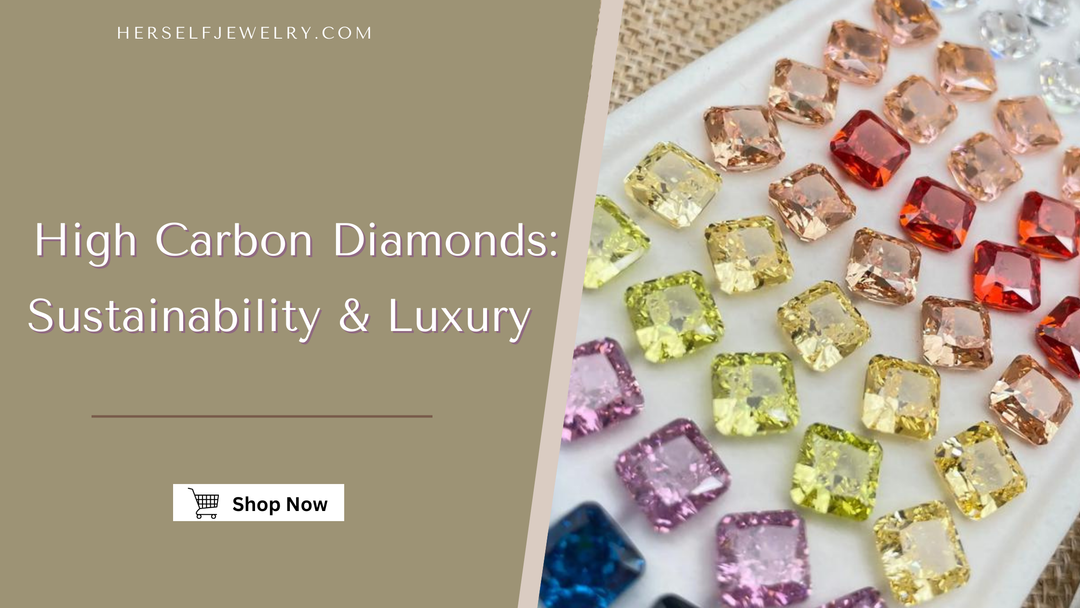
Advanced technology enables precise control over color saturation in lab-grown sapphires and rubies. The High-Pressure High-Temperature (HPHT) and Chemical Vapor Deposition (CVD) methods replicate geological conditions, producing stones indistinguishable from natural gems to the naked eye or standard gemological tools. Only specialized equipment detecting nitrogen distribution or growth patterns can identify lab-grown specimens.[^6]
Natural Gemstone Characteristics
Natural gemstones contain unique inclusions and color variations shaped by geological conditions over millions of years, creating one-of-a-kind pieces that many collectors value for authenticity and historical significance.[^5]
Natural stones from Herself Jewelry's collection feature distinctive characteristics tied to geographic origin. Colombian emeralds display different inclusion patterns than Zambian emeralds. Kashmir sapphires command premium pricing due to their velvety blue appearance created by microscopic rutile inclusions. Natural rubies from Myanmar possess fluorescence properties that intensify color under UV light.
These natural "fingerprints" serve as authenticity markers and contribute to rarity value. Top-grade natural gemstones without eye-visible inclusions represent less than 5% of mined production, commanding significant price premiums. The variation in natural stones means each piece tells a geological story spanning millions of years.
Which Quality Option to Choose?
For those prioritizing optical perfection and consistency, lab-grown gemstones offer superior clarity-to-price ratios. Herself Jewelry recommends lab-grown options for buyers seeking flawless appearance in larger carat weights. For collectors valuing natural origin, unique characteristics, and traditional gemstone heritage, natural stones provide emotional and historical significance that justifies higher pricing.
Comprehensive Price Comparison: Lab-Grown vs Natural Stones
Lab-Grown Gemstone Pricing
Lab-grown gemstones cost 20-40% less than comparable natural stones, with the price advantage increasing for larger carat weights and higher quality grades.[^2]
According to BriteCo's 2025 Lab-Grown Vs. Natural Diamond report, a 1-carat lab-grown diamond averages $1,000 compared to $4,200 for natural.[^1] Herself Jewelry's pricing structure for lab-grown gems demonstrates consistent value advantages:
• Lab-Grown Diamonds: $800-1,200 per carat (D-F color, VS1-VVS2 clarity)
• Lab-Grown Emeralds: 40-50% below natural emerald prices for comparable size and color intensity
• Lab-Grown Blue Sapphires: $300-800 per carat depending on color saturation and size
• Lab-Grown Rubies: $400-1,000 per carat for fine quality stones
The efficiency of laboratory production processes drives these cost advantages. Growing a 1-carat diamond requires 4-12 weeks and controlled energy inputs, bypassing expensive mining operations, transportation logistics, and multi-level distribution markup. As production technology advances, lab-grown gemstone prices continue declining 10-15% annually, making larger stones and premium designs increasingly accessible.[^7]
Natural Gemstone Pricing
Natural gemstones command premium pricing based on rarity, origin, and quality, with top-grade specimens appreciating 3-5% annually as supply constraints intensify.[^4]
Natural gemstone prices reflect geological rarity and extraction costs. Colombian emeralds exceed $5,000 per carat for top color and clarity. Kashmir sapphires reach $30,000+ per carat at auction. Burmese rubies command $10,000-50,000 per carat for "pigeon blood" red.[^8]
Standard commercial-grade natural gemstones available through Herself Jewelry follow more accessible pricing:
• Natural Diamonds: $4,000-6,000 per carat (D-F color, VS1-VVS2 clarity)
• Natural Emeralds: $1,500-4,000 per carat (medium to fine quality, Colombian origin)
• Natural Blue Sapphires: $800-3,000 per carat (Ceylon origin, unheated)
• Natural Rubies: $1,000-5,000 per carat (Mozambique origin, moderate heating)
Mining operations involve significant operational expenses including land acquisition, equipment, labor, environmental remediation, and sorting millions of carats to find gem-quality specimens. Only 20% of mined gemstone rough qualifies for jewelry use.[^6]
Cost Comparison: 2-Carat Engagement Ring Example
|
Component |
Lab-Grown Option |
Natural Option |
Savings |
|
Center Stone (2ct) |
$2,000 |
$8,400 |
$6,400 |
|
Setting (18K gold) |
$800 |
$800 |
$0 |
|
Side Stones (0.5ct total) |
$400 |
$1,600 |
$1,200 |
|
Total Ring Cost |
$3,200 |
$10,800 |
$7,600 (70%) |
The substantial savings on lab-grown options enable buyers to select larger center stones, higher quality grades, or more elaborate settings within the same budget. Herself Jewelry clients frequently upgrade from 1-carat natural to 2-carat lab-grown diamonds while maintaining comparable total investment.
Environmental Impact and Ethical Considerations
Environmental Footprint Comparison
Lab-grown diamonds produce 72 kg CO₂ per carat compared to 125 kg for natural diamonds, representing a 42% reduction in carbon emissions along with 85% less water consumption.[^3][^9]
Herself Jewelry's commitment to sustainability drives our extensive lab-grown gemstone collection. A 2023 MIT study confirmed lab-grown gems generate 90% fewer carbon emissions than mined diamonds when powered by renewable energy sources.[^10] Traditional gemstone mining disrupts an average of 1,760 tons of earth per carat of gem-quality diamond recovered.[^9]
The environmental advantages of lab-grown gemstones include:
• No Land Disruption: Zero deforestation, habitat destruction, or ecosystem displacement
• Reduced Water Usage: 85% less water consumption compared to mining operations[^9]
• Lower Energy When Renewable: Lab facilities powered by solar/wind reduce emissions by additional 60%[^10]
• Zero Mining Waste: No tailings, acid drainage, or toxic chemical runoff into waterways
• Reduced Transportation: Centralized production eliminates global supply chain carbon footprint
However, lab-grown production requires significant electricity. Facilities using coal-powered grids produce comparable emissions to mining. Herself Jewelry partners exclusively with laboratories using renewable energy sources to ensure genuine environmental benefits.
Natural gemstone mining generates substantial environmental concerns including deforestation across 230,000 hectares annually in diamond-producing regions, water contamination from processing chemicals, and ecosystem disruption in sensitive mining areas.[^6] Responsible mining initiatives and certification programs address some concerns, but environmental impact remains considerably higher than laboratory production.
Ethical and Social Considerations
Lab-grown gemstones guarantee conflict-free origin with transparent supply chains, eliminating concerns about labor exploitation and armed conflict financing that affect portions of the natural gemstone trade.[^11]
The Kimberley Process Certification Scheme monitors natural diamond trade to prevent conflict diamonds, but enforcement challenges persist. Approximately 5-10% of natural diamonds enter markets through uncertified channels, potentially funding conflict in several African regions.[^11] Natural gemstones from Myanmar (rubies), Colombia (emeralds), and Madagascar (sapphires) face varying labor and environmental regulation enforcement.
Herself Jewelry sources natural gemstones exclusively through certified ethical suppliers with documented chain of custody. Our lab-grown gemstones provide inherent ethical advantages:
• Zero Conflict Risk: Laboratory production eliminates all conflict mineral concerns
• Transparent Origin: Complete documentation from production facility to retail
• Fair Labor Standards: Regulated laboratory environments with documented worker protections
• No Child Labor: Industrial lab settings prevent child labor risks present in artisanal mining
• Community Impact: Lab-grown facilities provide high-skill jobs in developed regions
For buyers prioritizing ethical certainty, lab-grown gemstones from Herself Jewelry offer complete peace of mind regarding social impact and supply chain transparency.
Consumer Preferences and Market Trends 2025
Growing Lab-Grown Market Share
Lab-grown diamonds captured 45% of the U.S. engagement ring market by 2025, with the global lab-grown gemstone market projected to reach $91.85 billion by 2034.[^12][^13]
Consumer preference shifts demonstrate accelerating lab-grown adoption. The average lab-grown engagement ring features a 2.1-carat center stone compared to 1.5 carats for natural, as price advantages enable larger purchases within identical budgets.[^14] Younger demographics lead this transition:
• Millennials (ages 28-43): 52% prefer lab-grown for sustainability and value
• Gen Z (ages 18-27): 61% prioritize ethical sourcing and environmental impact
• Gen X (ages 44-59): 32% choose lab-grown primarily for cost savings
• Baby Boomers (ages 60+): 18% select lab-grown, preferring natural stone tradition
Herself Jewelry's sales data mirrors these trends, with lab-grown diamond rings comprising 58% of engagement purchases in 2024 compared to 31% in 2021. The self-purchase fashion jewelry segment shows even stronger lab-grown preference at 67%, as consumers invest savings into larger, more elaborate designs.[^14]
Natural Gemstone Market Resilience
Despite lab-grown growth, natural gemstones maintain strong demand in the luxury segment, investment-grade stones, and among buyers valuing traditional symbolism and rarity.[^4]
Natural diamond prices declined 34% from their 2022 peak as lab-grown competition intensified, but stabilized in late 2024.[^15] The natural gemstone market segments into distinct buyer categories:
Luxury/High-End Buyers: Continue preferring natural stones for perceived prestige, paying premiums for exceptional quality, documented provenance, and investment potential. Natural gemstones over 3 carats maintain robust pricing.
Sentimental/Traditional Buyers: Value natural origin symbolism, particularly for engagement rings and heirloom pieces intended for multi-generational transmission. Herself Jewelry's natural gemstone collections serve clients prioritizing traditional significance.
Investment Buyers: Purchase natural gemstones as tangible assets with appreciation potential, particularly rare colored gems (Kashmir sapphires, Burmese rubies, Colombian emeralds) which demonstrate 3-5% annual appreciation.[^4]
Market polarization continues, with lab-grown dominating volume sales while natural gemstones maintain premium pricing in select quality tiers and categories.
Making Your Decision: Lab-Grown or Natural Gemstone Rings?
Choose Lab-Grown Gemstones If You Prioritize:
Sustainability: Reduce environmental impact by 42-90% depending on energy source[^3][^10]
Budget Maximization: Invest savings in larger carat weight, higher quality grade, or elaborate setting design
Ethical Certainty: Guaranteed conflict-free origin with complete supply chain transparency
Optical Perfection: Superior clarity-to-price ratio with fewer visible inclusions
Modern Values: Align purchase with contemporary sustainability and social responsibility priorities
Herself Jewelry's lab-grown collections feature emeralds, sapphires, rubies, and diamonds with identical chemical properties to natural stones, certified by GIA and IGI, with full lifetime warranties.
Choose Natural Gemstones If You Value:
Traditional Significance: Honor centuries of gemstone symbolism and cultural heritage
Investment Potential: Top-grade natural gems appreciate 3-5% annually as supply tightens[^4]
Unique Character: Embrace distinctive inclusions and variations created over millions of years
Resale Value: Natural stones maintain 60-80% of retail value versus 20-30% for lab-grown[^4]
Rarity Appeal: Own gems formed through billion-year geological processes
Herself Jewelry's natural gemstone collection includes ethically sourced stones with complete origin documentation, GIA certification, and authenticity guarantees.
Hybrid Approach: Combining Both Options
Many Herself Jewelry clients optimize value by combining lab-grown and natural stones in a single piece. Popular strategies include:
• Lab-Grown Center Stone + Natural Side Stones: Maximize center stone size while incorporating natural accent gems
• Natural Center + Lab-Grown Halo: Feature a natural focal gem surrounded by lab-grown accent diamonds
• Lab-Grown Engagement Ring + Natural Wedding Band: Allocate budget across complementary pieces
This approach balances budget, values, and aesthetic preferences while experiencing benefits from both gemstone categories.
FAQ: Lab-Grown vs Natural Gemstone Rings
Q: Are lab-grown gemstones considered "real" gemstones?
A: Yes. Lab-grown gemstones possess identical chemical composition, crystal structure, and physical properties to natural gemstones, meeting all gemological definitions of "real." GIA certifies both lab-grown and natural diamonds using identical grading standards, with the only difference being origin disclosure on certificates.[^6]
Q: Can jewelers or gemologists distinguish between lab-grown and natural gemstones?
A: Lab-grown and natural gemstones are visually indistinguishable to the naked eye and under standard gemological examination. Advanced spectroscopic equipment analyzing growth patterns, nitrogen distribution, or fluorescence characteristics can identify lab-grown specimens. Ethical jewelers like Herself Jewelry provide full origin disclosure with independent certification for all gemstones.[^6]
Q: Do lab-grown gemstones have resale value?
A: Lab-grown gemstones generally have lower resale value (20-30% of retail price) compared to natural stones (60-80% of retail price) due to increasing supply and declining production costs. Buyers should select lab-grown primarily for beauty, affordability, and ethical benefits rather than investment potential.[^4] Herself Jewelry recommends natural gemstones for buyers prioritizing long-term value retention.
Q: How long do lab-grown gemstones last?
A: Lab-grown gemstones are equally durable as natural gemstones with identical hardness ratings (10 for diamonds, 9 for sapphires and rubies, 7.5-8 for emeralds on Mohs scale). They resist scratching, chipping, and damage identically to natural stones and last lifetimes with proper care. Herself Jewelry provides lifetime warranties on all lab-grown gemstone jewelry.[^6]
Q: Are lab-grown gemstones more environmentally friendly?
A: Yes, when produced using renewable energy. Lab-grown diamonds generate 42% less CO₂ (72 kg vs 125 kg per carat) and use 85% less water than mining operations.[^3][^9] However, facilities powered by coal produce comparable emissions. Herself Jewelry partners exclusively with renewable-energy laboratories to ensure genuine environmental benefits.
Q: What price difference should I expect between lab-grown and natural gemstones?
A: Lab-grown gemstones typically cost 20-40% less than comparable natural stones, with larger savings for higher quality grades and bigger carat weights. By 2025, 1-carat lab-grown diamonds average $1,000 versus $4,200 for natural diamonds—a 76% savings.[^1] Herself Jewelry provides transparent pricing on both options with side-by-side comparisons.
Q: Do lab-grown gemstones require special care or maintenance?
A: No. Lab-grown gemstones require identical care to natural stones. Clean with warm soapy water and a soft brush, avoid harsh chemicals and extreme temperature changes, and store separately to prevent scratching. Herself Jewelry provides detailed care instructions with all gemstone purchases.[^6]
Q: Can I get a lab-grown gemstone certified?
A: Yes. Leading gemological laboratories including GIA (Gemological Institute of America) and IGI (International Gemological Institute) certify lab-grown diamonds, emeralds, sapphires, and rubies using identical grading standards as natural gemstones, with origin clearly disclosed. All Herself Jewelry lab-grown gemstones include independent certification.[^6]
Q: Are lab-grown colored gemstones (emeralds, sapphires, rubies) as advanced as lab-grown diamonds?
A: Lab-grown colored gemstone technology matured significantly by 2025, producing emeralds, sapphires, and rubies indistinguishable from natural stones in color, clarity, and durability. The hydrothermal and flux methods replicate natural formation conditions, creating gems with identical chemical properties. Herself Jewelry's lab-grown colored gemstone collections demonstrate exceptional quality.[^5]
Q: Should I choose lab-grown or natural gemstones for an engagement ring?
A: Your decision depends on priorities. Choose lab-grown if you prioritize budget maximization, environmental sustainability, and ethical certainty—enabling larger center stones and higher quality within your budget. Choose natural if you value traditional symbolism, investment potential, and long-term resale value. Herself Jewelry consultations help couples navigate this decision based on individual values and budget, with complete transparency on both options.[^1][^4]
Conclusion: Your Informed Gemstone Decision
Choosing between lab-grown and natural gemstone rings involves weighing chemical properties, pricing structures, environmental impact, ethical considerations, and personal values. Lab-grown gemstones from Herself Jewelry deliver identical beauty and durability at 20-40% lower prices with superior environmental credentials and guaranteed ethical sourcing. Natural gemstones offer traditional significance, unique geological characteristics, and stronger long-term value retention.
Both options provide stunning beauty and lasting quality. Understanding the differences empowers you to select gemstone jewelry that aligns with your budget, values, and aesthetic preferences. Herself Jewelry's expert gemologists provide personalized consultations, independent certification, and lifetime warranties on all gemstone purchases—whether lab-grown or natural.
Explore Herself Jewelry's Lab-Grown and Natural Gemstone Collections
Discover certified lab-grown and natural emeralds, sapphires, rubies, and diamonds with complete transparency and authenticity guarantees: https://herselfjewelry.com/collections/lab-grown-gems
References:
1: BriteCo, "2025 Lab-Grown Vs. Natural Diamond Report," 2025. Finding: 1-carat lab-grown diamonds averaged $1,000 versus $4,200 for natural diamonds. https://brite.co/wp-content/uploads/2025/08/LGvsNaturalDiamondReport-2025.pdf
2: Azeera, "Lab-Grown vs. Natural Gemstones: What You Need to Know Before You Buy," November 26, 2024. Finding: Lab-grown gemstones are typically 20-40% less expensive than natural gemstones of comparable size and quality. https://www.azeera.com/blog/lab-grown-gemstones-vs-natural-gemstones-what-you-need-to-know-before-you-buy/
3: Esdomera, "Lab-Grown vs. Natural Diamonds: The Complete 2025 Guide," 2025. Finding: Lab-grown diamonds produce 72 kg CO₂ per carat compared to 125 kg for natural diamonds. https://esdomera.com/blogs/esdomera-news-matching-rings-jewelry-updates/lab-grown-vs-natural-diamonds
4: J&M Jewelry, "The Rise of Lab Diamonds in 2025: Lab-Grown vs. Natural Explained," 2025. Finding: Lab-grown diamonds lack established resale market, with retailers not buying them back, while natural stones maintain 60-80% retail value. https://www.jandmjewelry.com/post/the-rise-of-lab-diamonds-in-2025-lab-grown-vs-natural-explained
5: Multi-Gems, "Natural vs. Lab-Created Gemstones Differences," 2024. Finding: Lab-created gemstones have same physical and chemical composition as natural ones but differ in origin. https://multi-gems.com/blogs/latest-articles/natural-vs-lab-created-gemstones-differences
6: Reve Diamonds, "Natural vs Lab-Created Gemstones: What's the Real Difference," 2024. Finding: Lab-created gems usually have higher clarity because they're formed under perfect conditions. https://www.revediamonds.com/us/blog/natural-vs-lab-created-gemstones-whats-the-real-difference
7: Straits Research, "The Meteoric Rise of Lab-grown Diamonds," 2025. Finding: Lab-grown diamonds cost up to 40% less than mined diamonds while cutting CO₂ emissions by 99.98%. https://straitsresearch.com/statistic/the-meteoric-rise-of-lab-grown-diamonds
8: Ouros Jewels, "Natural Gemstones vs Lab Grown Gemstones," 2024. Finding: Lab-grown gemstones are 30-70% cheaper than natural gemstones. https://ourosjewels.com/blogs/education/natural-gemstones-vs-lab-grown-gemstones
9: Straits Research, "The Meteoric Rise of Lab-grown Diamonds," 2025. Finding: Lab-grown diamonds use 85% less water than mined diamonds. https://straitsresearch.com/statistic/the-meteoric-rise-of-lab-grown-diamonds
10: CaratX, "Lab-Grown Diamonds in 2025: Why Acceptance Is Rising," 2025. Finding: A 2023 MIT study found lab-grown gems produce 90% fewer carbon emissions than mined diamonds. https://caratx.com/blog-post/lab-grown-diamonds-in-2025-why-acceptance-is-rising-preference-is-falling-and-what-it-means-for-the-future
11: McKinsey, "The Diamond Industry Is at an Inflection Point," 2024. Finding: Rising awareness of ESG factors and ethical implications of mining natural stones resulted in decreasing demand. https://www.mckinsey.com/industries/metals-and-mining/our-insights/the-diamond-industry-is-at-an-inflection-point
12: BriteCo, "2025 Lab-Grown Vs. Natural Diamond Report," 2025. Finding: Lab-grown diamonds account for over 45% of US diamond jewelry market. https://brite.co/wp-content/uploads/2025/08/LGvsNaturalDiamondReport-2025.pdf
13: Fortune Business Insights, "Lab Grown Diamond Market Size, Share, Trends," 2025. Finding: Global lab-grown diamond market valued at $29.46 billion in 2025, projected to reach $91.85 billion by 2034. https://www.fortunebusinessinsights.com/lab-grown-diamond-market-110569
14: CaratX, "Lab-Grown Diamonds 2025: A Detailed Analysis," 2025. Finding: Average lab-grown engagement stone is 2.1ct versus 1.5ct for natural. https://caratx.com/blog-post/lab-grown-diamonds-2025-a-detailed-analysis-of-the-new-market-equilibrium
15: Forbes, "Lab-Grown Diamonds Boom: Is It Game Over For Mined Diamonds," 2025. Finding: Prices for rough mined diamonds fell 34% from 2022 peak to late 2024. https://www.forbes.com/sites/garthfriesen/2025/03/22/lab-grown-diamonds-boom-is-it-game-over-for-mined-diamonds/
#LabGrownGemstones #NaturalGemstones #GemstoneBuyingGuide #SustainableJewelry #EthicalJewelry #DiamondComparison #EngagementRings #JewelryInvestment #HerselfJewelry #GemstoneEducation


Leave a comment